On Peptide Purity GLP-1 agonists and associated compounds for weight management applications carry details issues. These peptides resolve details receptor devices, making identification confirmation particularly important. A compound with similar yet different task could create unanticipated impacts. Finnrick offers cost-free peptide screening for samples shipped to their facility.
Identification Confirmation Screening
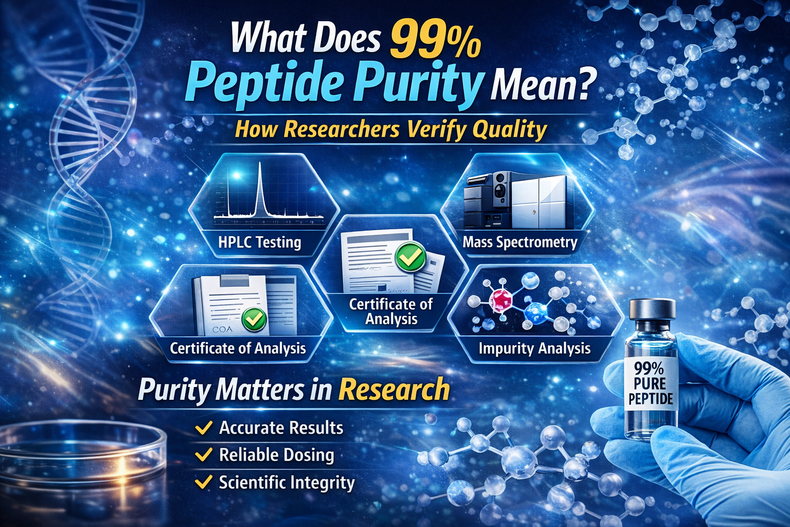
The purity of peptides is identified utilizing logical methods such as reversed-phase high efficiency fluid chromatography (RP-HPLC) and mass spectrometry (MS). Amino acid analysis can also be used to compute return or real amount of peptide. Peptide pureness screening is among the most vital components of research study peptide quality control. Pureness information is often included within a peptide Certificate of Analysis. For several buyers, logical paperwork is an essential part of distributor option. Physical features and peptide structure can affect dissolution behavior separately of purity. While higher purity percentages are commonly favored, purity should not be assessed in isolation.
The Heights
Where can I send my peptides to check for pureness?
ACS Peptide Testing Labs is a specialist peptide analysis research laboratory that approves examples from all 50 states. Whether you need to test peptide purity, confirm a vendor''s Certificate of Analysis, or run thorough pollutant screening, our lab gives quick, exact Purity Verification outcomes with in-depth coverage.
One of the most strict quality, including mindful HPLC purification-- in some cases multiple rounds-- and extensive QC. Needed for measurable studies, structural biology, in vivo research models, and any type of application where even small amounts of impurity can impact results. This is the quality where the boost most dramatically, since accomplishing that last 1-- 3% of purity needs throwing out a significant fraction of the manufactured material. A useful assay measuring downstream signaling-- or an architectural study using NMR or X-ray crystallography-- demands the greatest pureness available. Crystallographers specifically often require ≥ 98% purity because also small impurities can prevent crystal formation or introduce condition right into the crystal lattice. The reproducibility situation in biomedical research is well-documented. Item descriptions and categorizations do not imply any type of healing end results. Kai is the lab's AI study aide-- powered by Claude (Anthropic) and GPT (OpenAI)-- responsible for technological writing, literature evaluation, COA verification, and substance evaluation. Together they create the research study material published on this site. Detoxified by preparative RP-HPLC with quality assurance evaluation. This grade fits the majority of artificial insemination research applications-- receptor binding assays, enzyme task studies, and cell culture experiments. Not Additional resources every application demands 99% purity, and filtration is a considerable component of peptide manufacturing expense.
Researchers generally review pureness along with other high quality metrics instead of counting solely on a single portion.
High-performance liquid chromatography (HPLC) verifies ≥ 99.3% pureness, while mass spectrometry (MS) confirms molecular identity and architectural accuracy.
Peptide pureness is usually revealed as a percent, such as 95% or 98%.
The peptide dosage graph assumes reasonable pureness degrees for precise application.
Yet these COAs often come from the vendor's own testing, developing an obvious conflict of passion. Even when suppliers declare third-party screening, verifying those claims requires effort most customers don't make. Scientists often review mass spectrometry results alongside HPLC data to construct a much more complete understanding of item top quality. As the research study peptide industry remains to expand, understanding exactly how peptide pureness screening functions can assist scientists make more enlightened sourcing decisions and much better review vendor openness. Impurities aren't simply non-active fillers; they can proactively interfere with your job. Peptide purity testing stays among the most important devices scientists use to examine research substance high quality. Through methods such as HPLC and mass spectrometry, scientists can much better recognize peptide composition, validate item identification, and evaluation provider high quality standards. When integrated with Certificates of Analysis and clear paperwork, purity testing assists support notified sourcing decisions and long-lasting research consistency. When reviewing a peptide distributors list, scientists must prioritize vendors that provide detailed logical data. Commercial intent for peptides frequently leads to a market saturated with resellers who might not confirm the security of their supply during transit. These industrial laboratories generally serve pharmaceutical and biotech customers yet may accept individual research samples at proper price factors. Learning to determine red flags secures you from deceptiveness. These worths ought to match within acceptable tolerance, commonly ± 0.1% or ± 1 Da for smaller peptides. The lab offers HPLC pureness analysis and mass spectrometry identity confirmation. A chromatogram reveals optimals standing for various substances found throughout HPLC evaluation. The main top, typically the largest, represents your target peptide.